
Published 18 September 2026 · By Paradigma Emlak — Editorial Team · 4 min read
Buying a Home in Pescara and the Abruzzo Coast: A Practical Guide for Foreign Buyers
From the codice fiscale to the rogito, here is a general walkthrough of what buying property in Pescara and along the Abruzzo coast involves.
Why the Abruzzo coast
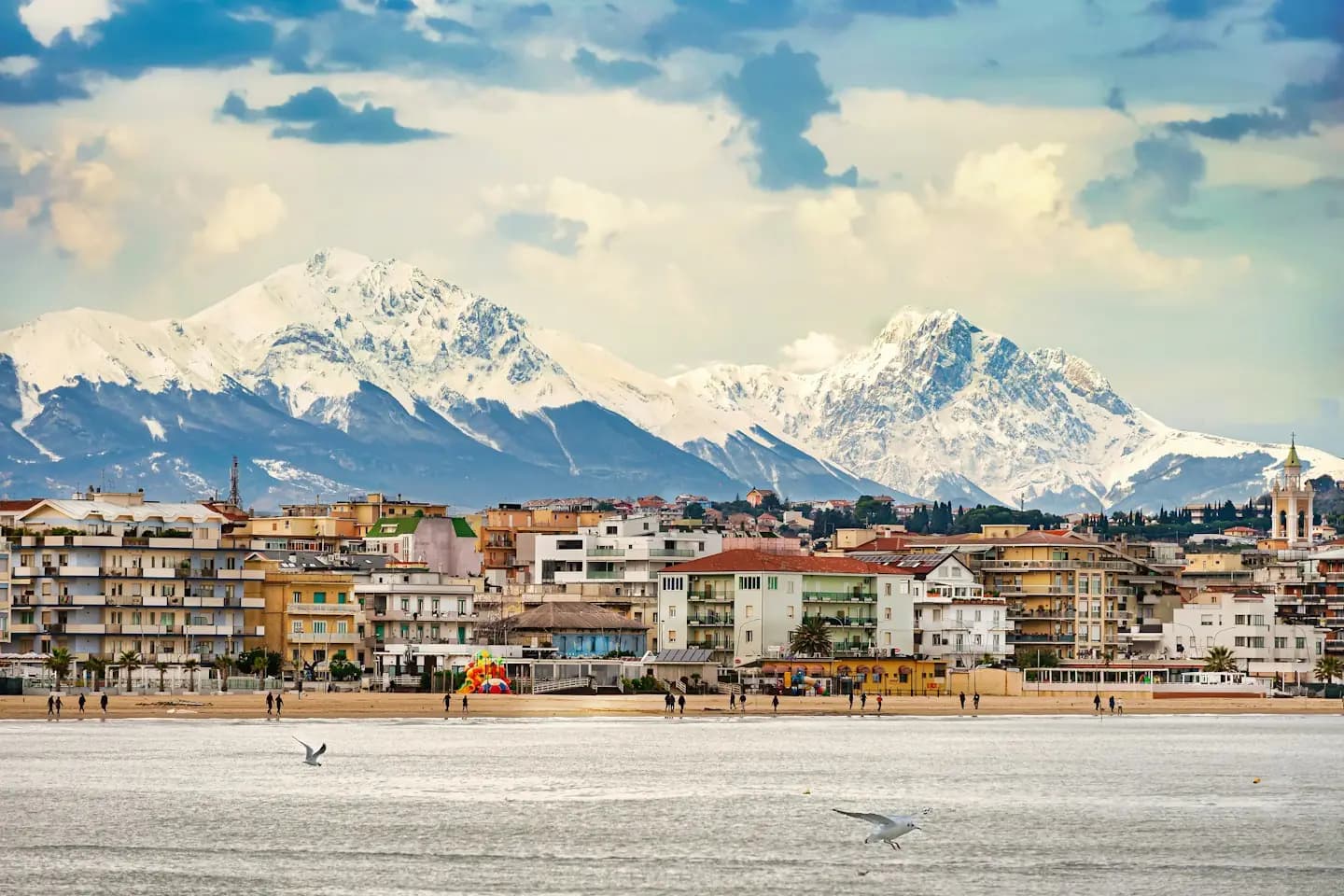
Abruzzo, on Italy's central-eastern coast, is one of the few Italian regions where the sea and the mountains sit close together. Pescara has the region's main airport, a long beach promenade, and the peaks of the Gran Sasso and Majella national parks visible inland. Connections to Rome are relatively short by road and air, and the coastline tends to be quieter than Italy's better-known tourist hotspots. This guide sketches, in general terms, what a foreign buyer should expect when purchasing property here for the first time. Every situation has its own details, so always confirm the specifics with a notaio (notary) and a commercialista (accountant) before acting.
1. Get a codice fiscale
Before you sign any contract in Italy — or even open a utility account — you need a codice fiscale, an Italian tax identification number. You can request it at a local Agenzia delle Entrate (Revenue Agency) office or at an Italian consulate in your home country. Issuance is usually free and quick, but do it early: every step of the property transaction runs through this number.
2. The preliminary stage: proposta and compromesso
Once you have chosen a property, the process typically opens with a proposta d'acquisto, a written purchase offer. Once the seller accepts, the parties sign a compromesso (preliminare di vendita), the preliminary sale contract. A caparra (deposit) is usually paid at this stage; the type of caparra (confirmatoria or penitenziale) should be spelled out clearly in the contract, since it determines what either party stands to lose if they later withdraw. Have an independent lawyer or your notaio review the preliminary contract before you sign it.
3. Due diligence: title and planning conformity
Before making an offer, or at the latest before the preliminary contract, have the property's visura catastale (cadastral record) and planimetria catastale (cadastral floor plan) checked against its actual physical layout. This is what conformità urbanistica e catastale means in practice — an unpermitted balcony or an internal wall moved without authorisation can turn into a real problem after purchase. Likewise, the APE (Attestato di Prestazione Energetica, the energy performance certificate) is a legal requirement from the moment a property is advertised, and it must be shown to the buyer.
4. The notaio and the rogito
Ownership transfers in Italy at the rogito notarile, the deed signed before a notaio — an impartial public official, not a party's own lawyer. The notaio verifies the title, checks for mortgages or liens, confirms the seller's ownership, registers the transfer with the land registry (Conservatoria dei Registri Immobiliari), and is responsible for the correct calculation and payment of the associated taxes. The buyer chooses and pays the notaio; because Italian notaries are legally required to be impartial, you are not obliged to use whoever the selling side proposes.
5. Typical cost categories
Quoting exact figures would be misleading, since tax rates depend on whether the property is a resale or new build, on the buyer's Italian residency status, and on whether the "prima casa" (first-home) relief applies. In general, budget for these categories:
- Imposta di registro (registration tax), or IVA (VAT) instead when buying new-build from a developer — which one applies depends on the seller's status.
- Imposte catastali e ipotecarie (cadastral and mortgage taxes).
- Notary fees, calculated on a professional scale proportional to the property's value.
- Agency commission, a percentage that should be disclosed in writing before you make an offer.
- Translation costs, if needed — a party who does not speak Italian is legally required to have an interpreter present at the rogito.
6. Financing
Foreign buyers can obtain mortgages from Italian banks, though the terms depend on proof of income, credit history and residency status. If you plan to finance the purchase, start the conversation with a bank before signing the preliminary contract, so the rogito date can be scheduled without delay.
A final note
This article is a general roadmap, not legal or tax advice. Italy's tax rules and procedures are updated from time to time — as of 2026 — so always confirm current rates and how they apply to your specific case with a notaio and a commercialista. If you are looking at property in Pescara or along the Abruzzo coast, get in touch and we can walk through what is currently on the market together.